Predator-Proof Chicken Run: The Complete Guide
Most runs are not broken into — they are reached through, dug under, or opened. This guide covers the five ways predators actually get chickens, and the specific fix for each: mesh, apron, latches, gaps and roof.
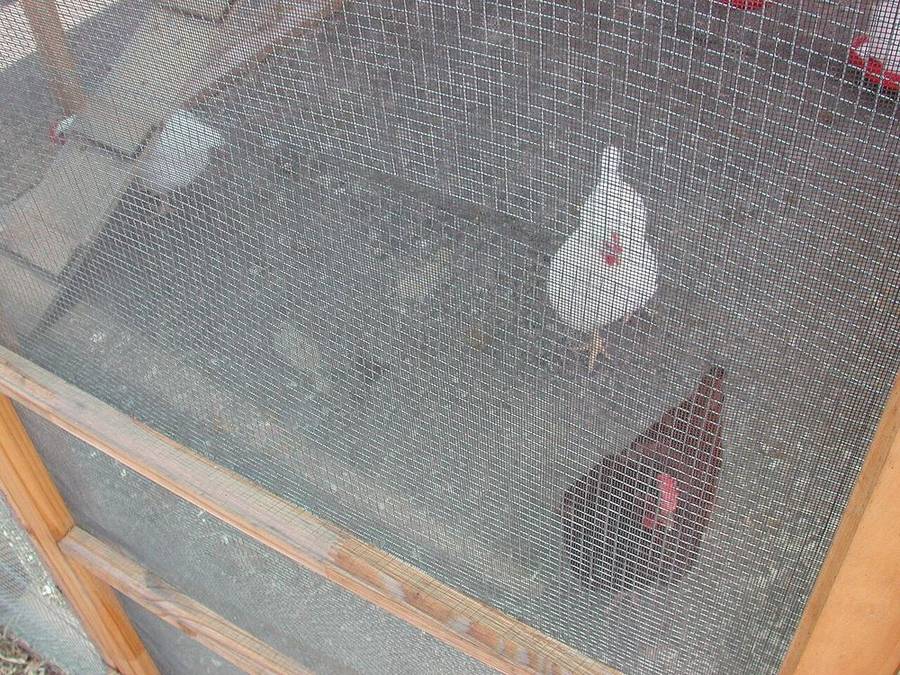
1. Reaching and tearing: hardware cloth vs chicken wire
Chicken wire (hexagonal poultry netting) was designed to keep chickens in, not predators out. A raccoon can tear it, a dog can burst it, and its roughly 1-inch holes let raccoon paws and weasels reach straight through — hens roosting against the mesh can be grabbed through it.
The standard that works is ½-inch, 19-gauge galvanised hardware cloth (welded wire mesh), screwed to the frame with fender washers — not staples, which pull out. Full coverage is best; if budget forces a choice, hardware cloth is non-negotiable on the bottom 3 feet of every wall, all vents, and anywhere a hen can be reached at roost height, with heavier welded wire above. The cost logic is in the budget guide: mesh is where the money belongs.
2. Digging: the apron (skirt)
Foxes, dogs and skunks dig at the base of the wall. The fix is not a deep trench — it is an apron: hardware cloth laid flat on the ground, extending 12–18 inches outward from the base of the run, pinned down and (optionally) covered with soil or gravel. A digging predator starts at the wall, hits mesh, and gives up — animals almost never back up and start again beyond the apron. The alternative is burying mesh 12 inches straight down along the wall, which works but rots faster and takes three times the effort.
Cross-section: the apron turns the ground itself into the barrier. Bend the inner edge up the wall a few inches and screw it to the base board for a seamless join.
3. Opening: latches a raccoon cannot work
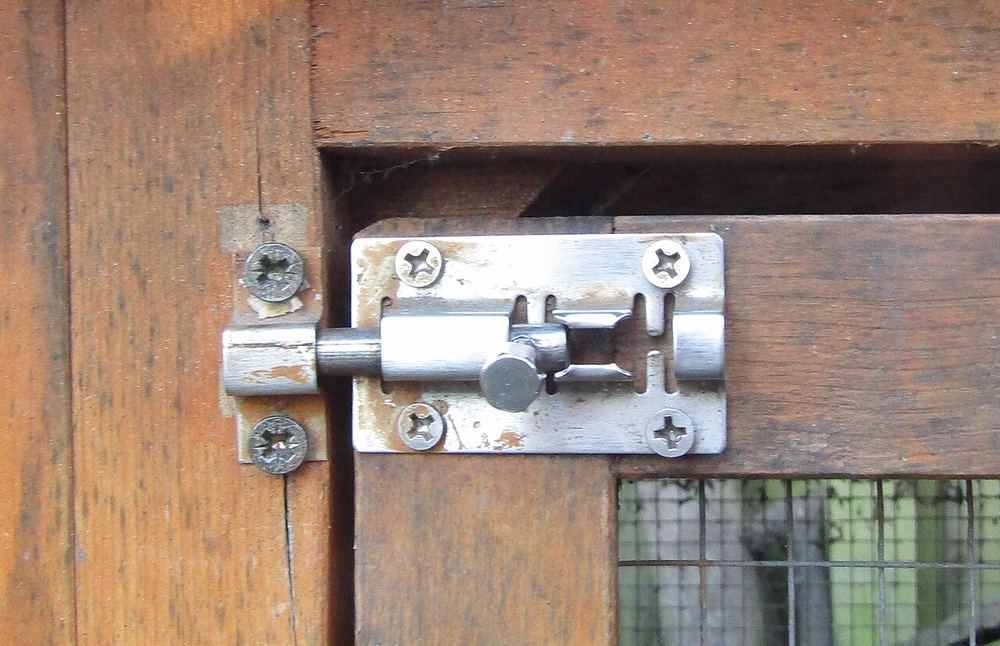
Raccoons manipulate simple latches, hooks and sliding bolts with something close to hands. Every door and pop-hole needs a two-step latch: a bolt or latch that also requires a second action — a carabiner through the hasp, a spring-loaded gate latch with a padlock loop, or a barrel bolt plus clip. If a toddler could open it in under ten seconds, so can a raccoon.
4. Squeezing: the half-inch rule
Walk the finished run and hunt for gaps: where the door meets the frame, where mesh meets roof, corners, the gap under a door on uneven ground. The rule is simple — no gap larger than ½ inch anywhere. Weasels pass through 1-inch holes; rats and snakes through less. A foam of offcut hardware cloth and a handful of washers fixes most of what you find; make this walk a monthly habit, because ground settles and timber moves.
5. From above: roof and climbers
Hawks take hens in daylight from open runs, and raccoons and opossums climb fences and drop in from overhanging branches. Cover the run — rigid roof, mesh, or at minimum tightly strung wire or netting (netting alone stops hawks, not climbers). Trim branches that overhang the run, and remember a covered run also stays drier, which your hens will thank you for. Roof options are covered in the ideas list (#8).
The 10-minute monthly check
- Pull hard on mesh at ground level in five places — any give means fixings are failing.
- Check the apron is still flat and covered; re-pin lifted edges.
- Work every latch with gloves on — if it is getting stiff for you, it was too easy for a raccoon already.
- Scan for new gaps at corners and doors (the half-inch rule).
- Look for digging sign, tracks or scat around the perimeter — an attempt you can see is a warning you get for free.
Honest limit: no guide can promise a run is proof against every predator in every place — bears, in particular, require electric fencing and local advice. What this page gives you is the standard that defeats the predators that take almost all backyard hens: raccoons, dogs, foxes, hawks, weasels and rats.
Ready to build one properly?
Our free starter plan — the Backyard Run, 8′ × 16′ — gives you the full materials list, tool list and step-by-step build outline for a run that holds up to 12 hens.
Keep planning
15 Cheap DIY Chicken Run Ideas
Cheap builds that still follow these rules.
How Big Should a Chicken Run Be?
Size and safety together: the two guides to read before building.
12 Pallet Chicken Run Ideas
Why every pallet run on that page assumes a mesh lining.