PVC Pipe Chicken Run: The Lightest Run You Can Build
A PVC pipe chicken run is a hoop run made from bent PVC pipe over a simple base — no sawing beyond cutting pipe, up in an afternoon, light enough for one person to move. It is also the most over-sold design in backyard chickens. This guide gives you the build, the real costs, and an honest list of when PVC is the wrong choice.
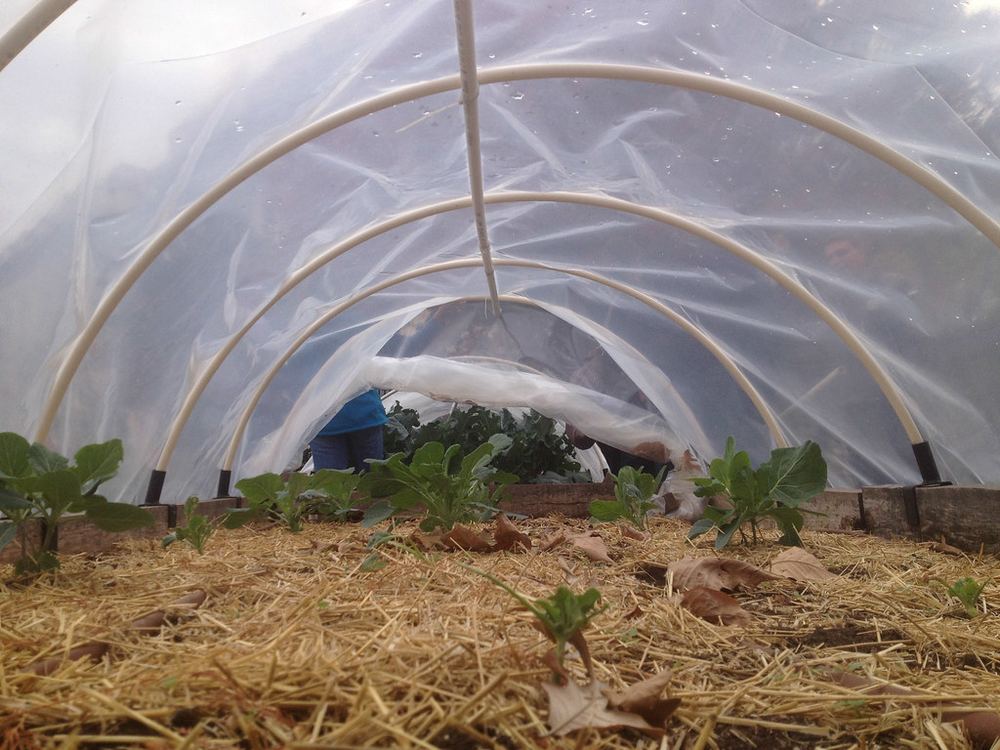
How a PVC run is built
- Base frame. Two side rails (2×4 lumber, or 2-inch PVC laid flat) set 6–8 feet apart, as long as you want the run — 10 feet is a good start.
- Hoops. 10-foot lengths of ¾-inch or 1-inch Schedule 40 PVC, bent into arches and fixed to the base every 2–3 feet. The arch gives roughly 5 feet of headroom in the middle at an 8-foot span.
- Spine and braces. One pipe along the ridge, cable-tied or screwed to every hoop, plus diagonal braces at the ends. Without the spine the hoops wobble independently and the run racks sideways.
- Mesh. Welded wire or hardware cloth over the whole structure, fixed with UV-stable cable ties or pipe clips, with a skirt of mesh flat on the ground around the base.
- Door. The honest weak point of every PVC run: a framed mesh door hung on one end, or a lift-up section of mesh you clip shut. Build the door from a simple wood frame — a flapping mesh flap will not survive a season of daily use.
What it costs
For an 8′ × 10′ run (80 sq ft, right for 6–8 hens): pipe and fittings run about $40–$70, mesh $40–$70 depending on whether you choose welded wire or hardware cloth, base rails and fasteners $15–$25. Total: roughly $90–$160 — among the cheapest runs in our 15 cheap run ideas, and the fastest to build.
Pros
- Light. One person can drag it to fresh ground; two can carry it anywhere.
- Fast and forgiving. No precise cuts, no foundations, mistakes unclip.
- Cheap and available. Every hardware store stocks the parts.
- No rot. The pipe itself shrugs off ground contact that eats untreated lumber.
Cons — read this part twice
- UV brittleness. Sunlight degrades PVC over 2–4 seasons; hoops snap at the bend when they go. Painting the pipe genuinely slows this down.
- Strength. A large dog leaning on a hoop run, or a heavy snow load, can flatten it. It is a fair-weather, low-pressure structure.
- Wind. A covered hoop run is a kite. Stake it or weigh the base rails, always.
- Predator ceiling. The mesh decides safety, not the pipe — but a structure this flexible can be pushed under at the base if the skirt is skipped.
When a PVC run suits you — and when it doesn't
Suits: renters and anyone who cannot build permanently; seasonal or quarantine pens; daytime-only runs in low-predator suburbs; growers and meat birds on rotated pasture. Doesn't suit: raccoon- and dog-heavy areas as the only housing; snow country without a plan to clear it; anyone who wants to build once and forget it for a decade — that is a framed wood run.
The hybrid worth knowing: PVC hoops over low pallet walls (idea #6 in our pallet run ideas) fix the two worst PVC problems — base push-under and anchoring — for almost no extra money.
Ready to build one properly?
Our free starter plan — the Backyard Run, 8′ × 16′ — gives you the full materials list, tool list and step-by-step build outline for a run that holds up to 12 hens.
Keep planning
15 Cheap DIY Chicken Run Ideas
PVC in context: how it compares with 14 other cheap builds.
How Big Should a Chicken Run Be?
Size the PVC run correctly before you cut pipe.
Predator-Proof Chicken Run
Skirts, mesh choice and latches for lightweight runs.